The Story Behind October 12 and Granada
Updated: October 2026
Direct answer: October 12 commemorates Christopher Columbus’s arrival in the Bahamas in 1492, and Granada is at the heart of that story. The city surrendered to the Catholic Monarchs on January 2, 1492, and on April 17, at the Royal Palace of Santa Fe, just outside Granada, the monarchs signed the Capitulations that made the voyage possible. Furthermore, on October 12, 1504, Isabella the Catholic dictated her will, in which she requested to be buried in Granada, where she rests today in the Royal Chapel.
October 12, 1492: What Is Remembered
Christopher Columbus set sail from Palos de la Frontera on August 3, 1492, with three ships—the Santa María, the Pinta, and the Niña—and sighted land on October 12 on the island of Guanahaní, in the Bahamas. Columbus believed he was reaching the shores of Asia; the encounter between Europe and the Americas began with that geographical misunderstanding.
That day is the one that Spain later designated as a national holiday. But reaching that point required lengthy negotiations with the Catholic Monarchs, and much of that process was decided in Granada and its surrounding areas.
Granada Before Columbus: The War That Set Everything Back
According to the Santa Fe Municipal Archives, the Catholic Monarchs postponed their decision on Columbus’s project until the war in Granada had ended. In the meantime, Isabella and Ferdinand set up their headquarters at a military camp in La Vega, on the site of which the town of Santa Fe was eventually founded.
It was in that royal chapel that the terms of surrender with Boabdil for the handover of Granada were signed on November 25, 1491, and on January 2, 1492, the city surrendered. With the atmosphere of victory now in full swing, the monarchs returned to the pending matter. If you want to understand what that January 2 meant, read about January 2 and the symbolism of the Royal Chapel.
| Date | Event | Connection to Granada |
|---|---|---|
| Nov. 25, 1491 | Terms of Surrender for Granada | Signed in Santa Fe |
| Jan. 2, 1492 | Surrender of Granada | End of the war and of the Nasrid monarchy |
| April 17, 1492 | The Treaty of Santa Fe with Columbus | Signed at the royal estate of Santa Fe, near Granada |
| April 30, 1492 | Columbus’s Titles and Order to Palos to Provide Ships for His Use | Documents issued by the monarchs from Granada |
| August 3, 1492 | Departure from Palos de la Frontera | Start of the first voyage |
| Oct. 12, 1492 | Arrival in Guanahani (Bahamas) | National Holiday Date |
| Oct. 12, 1504 | Will of Isabella the Catholic | She asks to be buried in Granada |
The Terms of the Surrender of Santa Fe
On April 17, 1492, Ferdinand of Aragon, Isabella of Castile, and Christopher Columbus signed the terms of the voyage in Santa Fe. In exchange for his expedition, Columbus was granted the titles of admiral, viceroy, and governor of the lands he might discover. On April 30, the monarchs issued the charters and ordered Palos de la Frontera to make ships available to the explorer.
The document is so widely recognized that it has been part of UNESCO’s Memory of the World Register since 2009. The text is known through copies and records preserved in archives such as the Crown of Aragon Archive, the General Archive of the Indies, and the Simancas Archive. You can view the facsimile and its context at the Santa Fe Municipal Archive.
October 12, 1504: Isabel's will
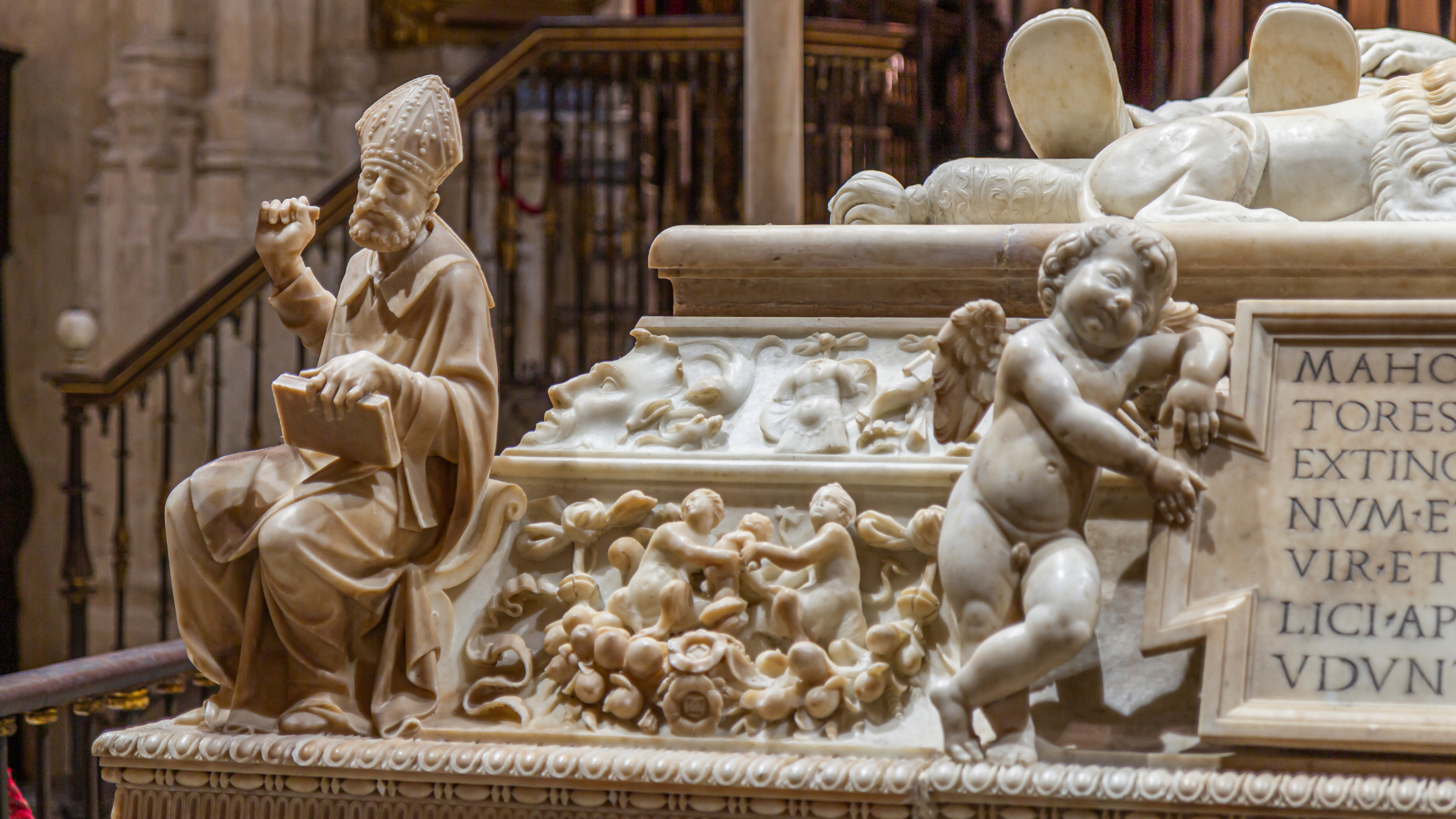
Exactly twelve years after her arrival in the Bahamas, on October 12, 1504, Isabella the Catholic drew up her will in Medina del Campo. Among her provisions, she ordered that, if she died outside of Granada, her body be transferred to that city. She died on November 26, 1504, and her remains rest today in the Royal Chapel, alongside those of Ferdinand. You can read more about the funeral of Isabella the Catholic.
Three days before his death, on November 23, he signed a codicil containing a clause regarding the inhabitants of the Indies: he requested that they not be harmed, either personally or in their property, and that they be treated fairly. To what extent this wish was fulfilled is a question that historians continue to debate. The will published by the University of Barcelona allows readers to view the original text.
If you want to learn more about the queen from Granada, the guided tour “Isabel la Católica: Soul of a Queen, Wife, and Mother” traces her legacy in the city.
From "Fiesta de la Raza" to "National Holiday"
The name of the holiday has changed over time. In 1918, it was declared a national holiday under the name Fiesta de la Raza; a decree dated January 10, 1958, officially designated it as Hispanic Heritage Day; and in 1981, a royal decree named it the National Holiday of Spain and Hispanic Heritage Day. Law 18/1987, dated October 7, established October 12 as Spain’s National Holiday without mentioning the word “Hispanidad.”
Outside of Spain, the date is also observed in different ways: in the United States, it is Columbus Day; in Venezuela, Indigenous Resistance Day; and in Argentina, Cultural Diversity Day. Understanding the facts helps us grasp why some celebrate, others reflect, and still others honor the memory of Indigenous peoples.
October 12 is also the feast day of Our Lady of the Pillar. Granada Cathedral has a chapel dedicated to this title, which you can explore in the Chapel of Our Lady of the Pillar at Granada Cathedral.
Granada on the Map of the Americas
The name “Granada” crossed the Atlantic very early on. In 1524, Francisco Hernández de Córdoba founded the city of Granada in Nicaragua, on the shores of Lake Cocibolca. And between 1536 and 1538, Gonzalo Jiménez de Quesada named the territories of what is now central Colombia the New Kingdom of Granada: as he himself explained, he did so because he had lived in the Kingdom of Granada and because the lands reminded him of it. His place of birth, incidentally, remains a subject of debate between Granada and Córdoba.
Columbus and Isabella in Isabel la Católica Square
In the center of Granada, next to the Gran Vía de Colón, sculptor Mariano Benlliure erected a monument in 1892 to mark the fourth centennial: Columbus presents his plan to Isabella the Catholic in the scene of the Capitulations. Its official dedication was scheduled for October 12, 1892, but the ceremony could not take place as planned, and the monument was dedicated on November 2. It was originally located on the Paseo del Salón and was later moved to the square that today bears the queen’s name, just a few minutes’ walk from the Royal Chapel. Admission is free, and it is always open to the public.
How to Spend October 12 in Granada
In 2026, October 12 falls on a Monday, so Granada will enjoy a three-day weekend. If you want to follow the thread of this story, a good route takes you from the square with the monument to the Royal Chapel, then to the Cathedral, and, as evening falls, to SILENTIA. To plan your long weekend, check out the guide on what to see in Granada during the October long weekend.
| Location | What to look for in this story | Status as of October 9, 2026 |
|---|---|---|
| Isabel la Católica Square | Monument to Columbus and Isabella (Benlliure, 1892) | Public space, free admission |
| Royal Chapel | Tombs of Isabella and Ferdinand | Open to visitors since its reopening on August 20. €7 general admission, €5 reduced admission |
| Granada Cathedral | Chapel of Our Lady of the Pillar and Kerygma Exhibition | Open to visitors starting September 11; Kerygma exhibition runs through the end of November |
| SILENTIA (Cartuja) | Immersive Night Tour | Fridays, Saturdays, Sundays, the days before holidays, and holidays. €18 general admission, €15 reduced admission |
Holidays may have their own hours. In previous years, the Royal Chapel has been open only in the afternoon on October 12, so check the hours page before you go and review the official admission fees. If you want to visit several monuments, the Combo Ticket lets you visit multiple sites with a single purchase. And you can buy tickets for the Royal Chapel on its official ticketing website.
Preguntas frecuentes
What is celebrated on October 12 in Spain?
Spain celebrates its National Day, which Law 18/1987 established as October 12 in commemoration of Columbus’s arrival in the Americas in 1492. It is also the feast day of Our Lady of the Pillar.
What does Granada have to do with October 12?
Granada was the setting for the events that made the voyage possible: the city’s surrender on January 2, 1492, and the signing, in Santa Fe, of the Capitulations with Columbus on April 17. Furthermore, Isabella the Catholic made her will on October 12, 1504, and asked to be buried in Granada.
Where were the Santa Fe Capitulations signed?
In the town of Santa Fe, in the Vega de Granada, on April 17, 1492. Santa Fe grew out of the camp that the Catholic Monarchs established during the War of Granada.
What happened on October 12, 1504?
Isabel la Católica drew up her will in Medina del Campo. Among other things, she ordered that her body be taken to Granada if she died outside the city. She died on November 26, 1504.
Is October 12, 2026, a holiday?
Yes. National Day is a holiday throughout Spain, and in 2026 it falls on a Monday, making for a long weekend.
Will the Cathedral and the Royal Chapel be open to visitors on October 12, 2026?
As of October 9, 2026, both monuments are open to visitors following the August earthquakes. Hours may vary on holidays, so it's best to check the hours page before you go.
Visit the places featured in this story. Buy your official tickets at Tickets Granada Cristiana, the official ticketing platform for the monuments of the Archdiocese of Granada. Managed by Viajes San Cecilio S.L.U. · Calle Tundidores, 12, Granada · 958 21 59 09.