The Monastery of San Jerónimo in Granada deserves a visit of its own because it packs into a single hour what other monuments spread over several stops: a Gothic cloister, a refectory, a sala de profundis, a sacristy holding a piece tied to the Great Captain, and a Renaissance church whose main chapel was conceived as a mausoleum. General admission is €7 (€5 reduced, free for children under 12), an audio guide is included and the tour takes about 60 minutes.
San Jerónimo is not a filler stop
In Granada it is easy to fall into the usual itinerary: Cathedral, Royal Chapel and, with luck, a slot for the Cartuja. San Jerónimo tends to be left for “if we have time”, which is a planning mistake rather than a matter of taste. It is a monument you enjoy more when you are not checking your watch: you enter through the compás, move from street noise to the silence of the cloister and suddenly find yourself in one of the most striking churches of the Granadan Renaissance.
It is also not a museum or an empty building. It is still home to a community of Hieronymite nuns, and you can feel it: this is a place of prayer where the cultural visit lives alongside the life of the monastery. That is why it deserves its own slot in your day rather than being squeezed between two appointments.
A monastery born in Santa Fe and settled in Granada
The Catholic Monarchs founded the monastery in 1492 at the camp they had set up in nearby Santa Fe. It soon became clear the site was not the best one, and it was moved to Granada, where work at its current location began as early as 1503. It then took the name it still holds: Royal Monastery of the Conception of Our Lady of Granada. It is also the first Christian monastery whose construction began in the city after the conquest.
The Hieronymite monks moved in in 1521 and lived here until Mendizábal’s confiscation (1835), when the building became barracks. In the 1960s it returned to the Order of St. Jerome and, after restoration, resumed its original function. Since 1977 it has been home to a community of Hieronymite nuns who came from the nearby Monastery of Santa Paula, now a hotel. For more depth, read the history of the Monastery of San Jerónimo on our blog.
What you see in about 60 minutes
The route is linear and easy to follow, and the audio guide included in your ticket, played from your phone, accompanies each space. These are the main stops:
| Space | What to look for |
|---|---|
| The compás | The transition between the city and the silence of the monastery; from here you can admire the church façade, the work of Diego de Siloé, Martín Díaz de Navarrete and Pedro de Orea. |
| Processional cloister | Gothic in style; this is where the monks spent most of their time. |
| Refectory and sala de profundis | The community’s dining hall and the room dedicated to prayer. |
| Chapter houses | Two rooms where the community used to meet. |
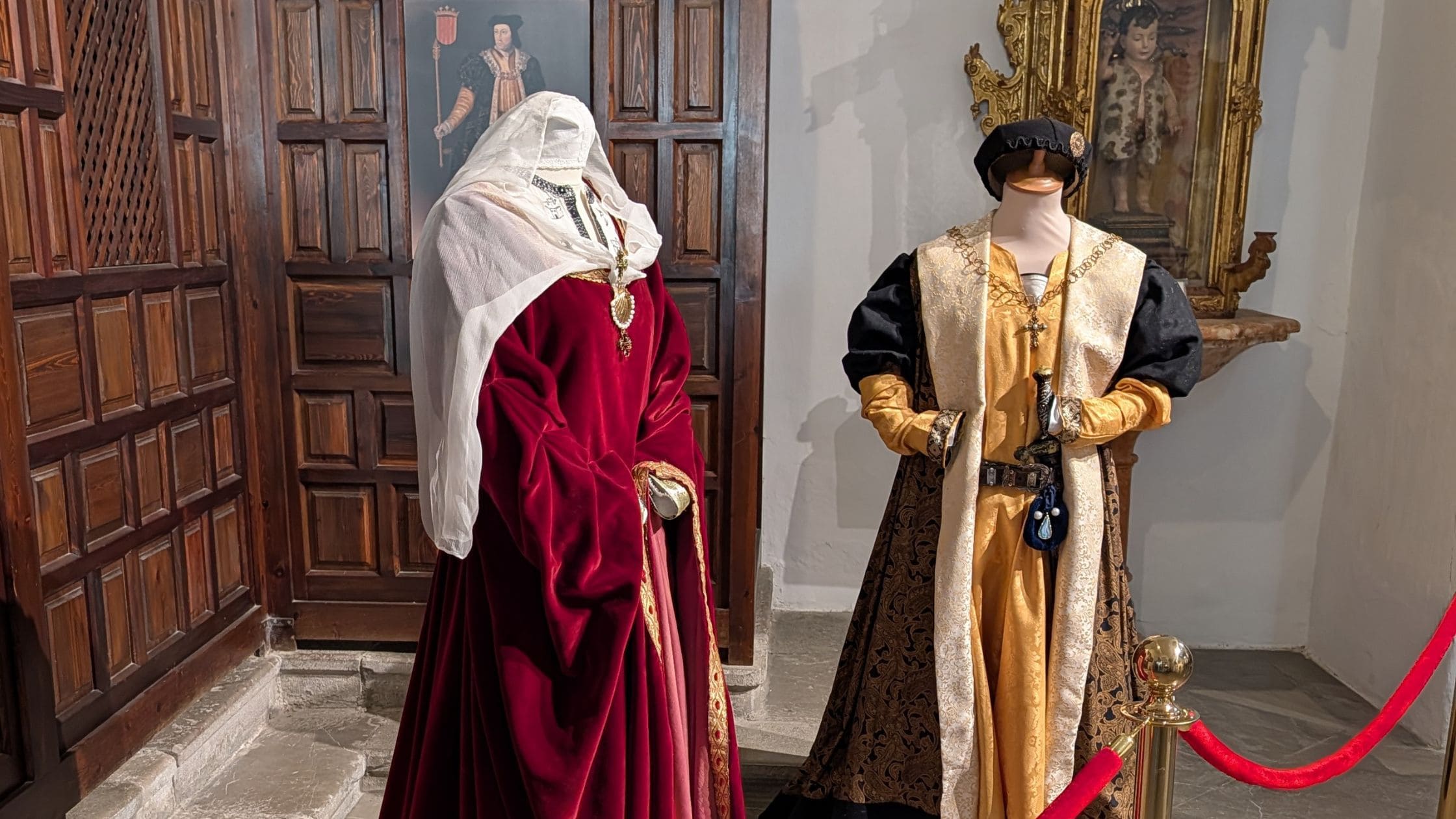
| Sacristy | Home to the Niño Jesús de las Batallas, the image that accompanied the Great Captain on his campaigns. |
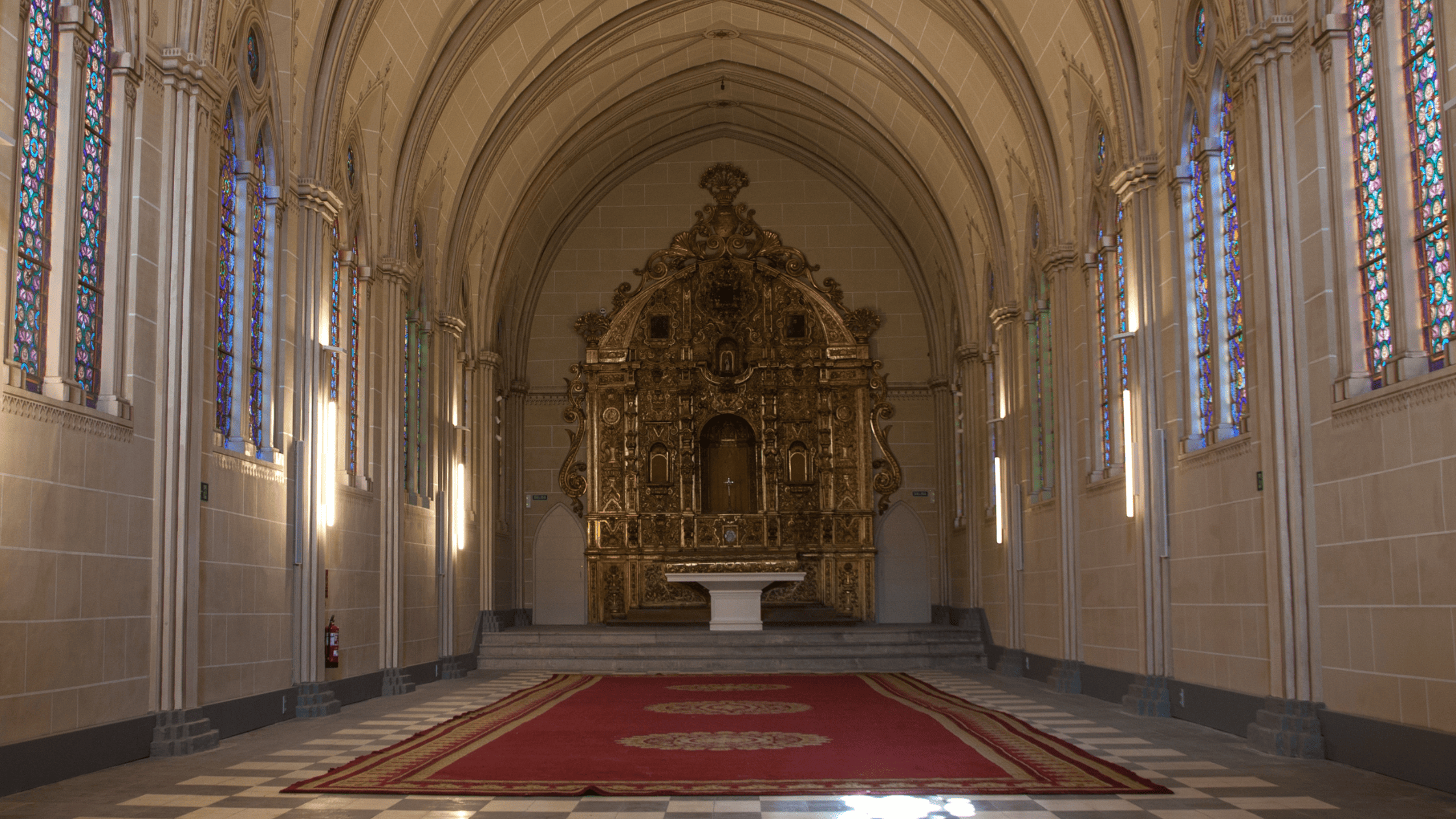
| Church and main chapel | Dedicated to the Immaculate Conception; the main chapel and its altarpiece are the heart of the visit. |
The main chapel and the Great Captain
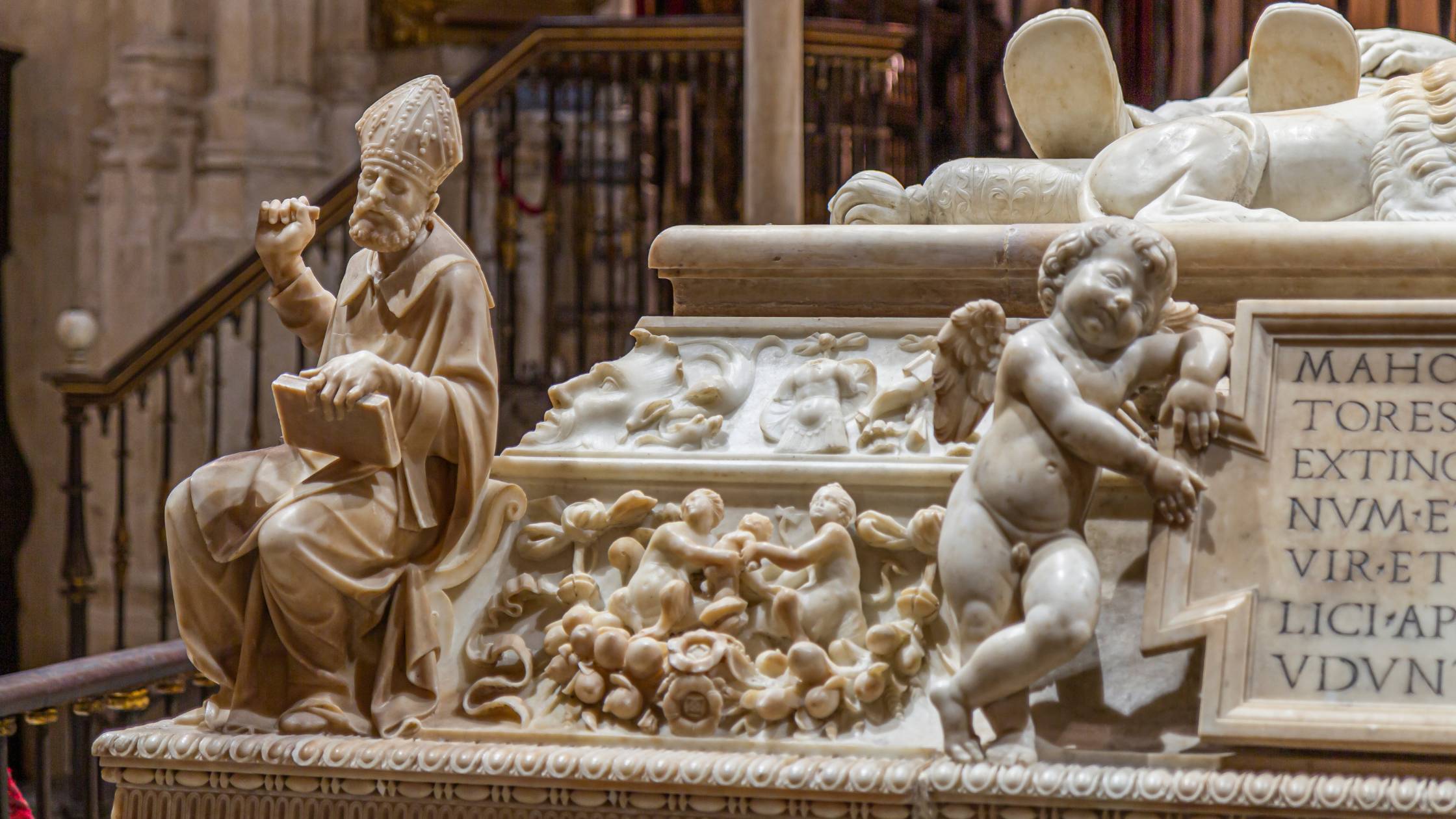
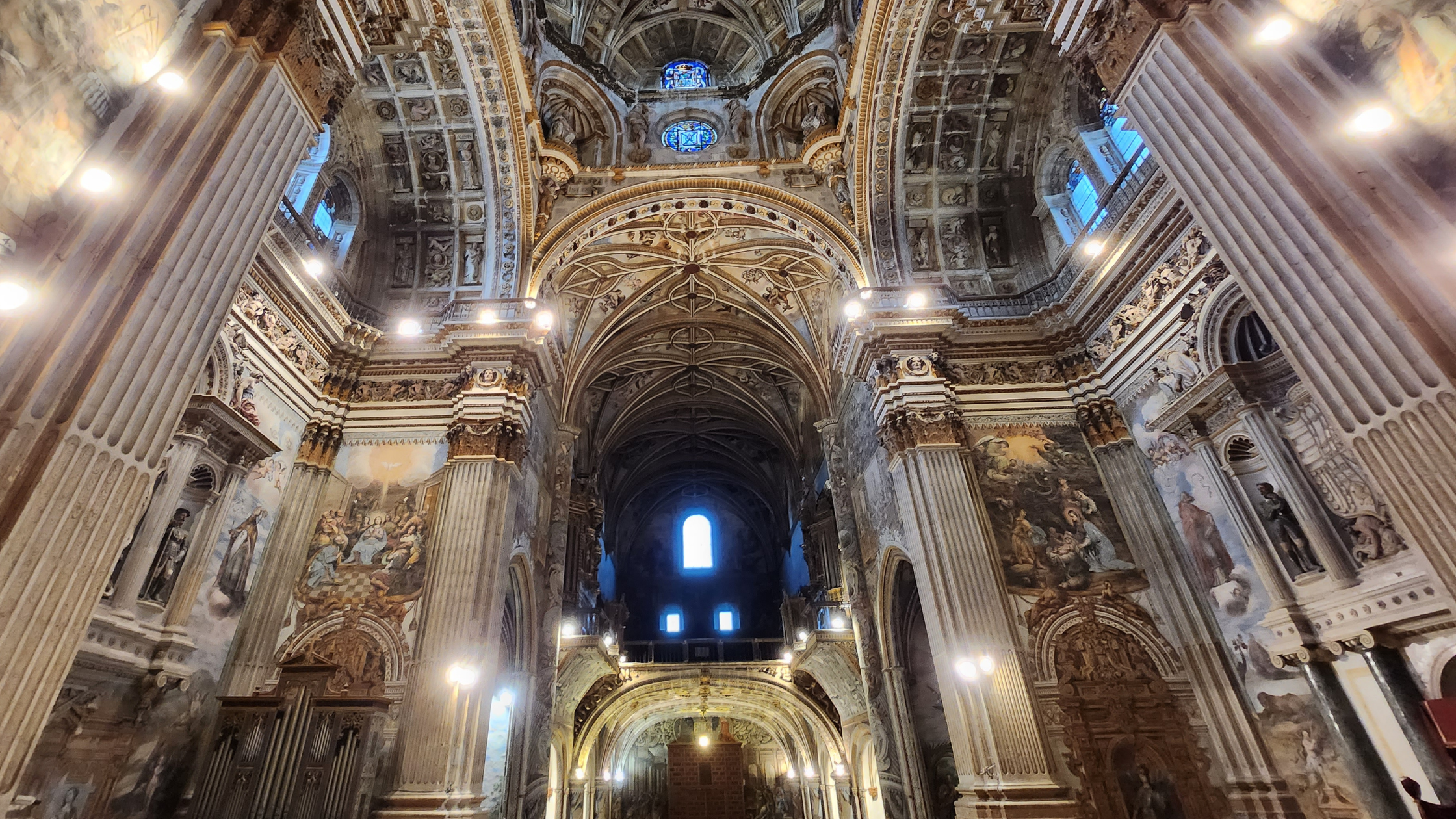
If there is one reason to give San Jerónimo its own morning or afternoon, it is the main chapel. Doña María de Manrique, Duchess of Sessa, commissioned it in the Renaissance style as a mausoleum for her husband, Gonzalo Fernández de Córdoba, the Great Captain. Diego de Siloé built it following an earlier design by Jacobo Florentino, and the praying statues of the couple flank the altar.
Above them rises a Mannerist altarpiece made between 1570 and 1605 by artists such as Juan de Aragón, Lázaro de Velasco, Pedro de Orea, Pedro de Raxis, Bernabé de Gaviria and Vázquez el Mozo. It is an ensemble that asks for time: look at it scene by scene, raise your eyes to the vault and let the audio guide set the context. You will find more detail in our articles on the Great Captain and the Monastery of San Jerónimo and the main altarpiece.
The Empress’s Cloister: what you can and cannot see
From the processional cloister you can see the so-called Empress’s Cloister, named after Isabella of Portugal, wife of Charles I of Spain and V of Germany, who lived there for most of her stay in Granada in 1526. One thing worth knowing before you go in: it belongs to the enclosed area where the community lives, so you can look at it but not visit it. We explain it in more detail in our article on the Cloister of the Empress.
Practical information to plan your visit
The monastery is at Calle Rector López Argüeta, 9, 18001 Granada. Hours change with the season, so always check the official page for hours, admission and tickets before you go. As of October 2026, the published schedule is:
| Season | Monday to Saturday | Sundays and holidays |
|---|---|---|
| Summer | 10:00–13:00 and 16:00–19:00 | 11:00–13:00 and 16:00–19:00 |
| Winter | 10:00–13:00 and 15:00–18:00 | 11:00–13:00 and 15:00–18:00 |
The gates close 30 minutes after the end of each slot. The monument is closed on Good Friday, and cultural visits are not held during worship services or other religious celebrations.
| Ticket type | Price |
|---|---|
| General | €7 |
| Students aged 13 to 25 with student ID | €5 |
| People with a certified disability | €5 |
| Children under 12 (not school groups) | Free |
You will find the rates for all the monuments gathered on a single page. Inside the monastery, photos and video are allowed as long as they do not disturb people who are praying; eating and drinking are not allowed, and visitors must keep silent, dress respectfully, remove head coverings and silence their phones (the audio guide being the sensible exception). Pets are not allowed, except guide dogs. Accessibility is limited.
How to combine it without losing its spotlight
Giving it its own visit does not mean visiting it alone. It means not squeezing it between two other monuments. If you prefer to group several visits, the Combined Ticket lets you bundle them into one purchase; the sensible approach is to spread them over different days or clearly separate morning and afternoon. And if you are torn between this monastery and the Cartuja, our guide La Cartuja or San Jerónimo? helps you choose according to your interests.
To decide, think about how you want to experience the visit: the Cartuja dazzles with its Baroque exuberance; San Jerónimo invites you to slow down, to look at an altarpiece for ten minutes and to understand how faith was rebuilt in Granada after 1492. If military history, the Renaissance or the silence of a working monastery appeal to you, this is your monument.
Frequently asked questions
How long does it take to visit the Monastery of San Jerónimo?
The visit takes about 60 minutes. Allow a little more if you want to listen to the audio guide calmly in the church and the main chapel.
How much is a ticket to the Monastery of San Jerónimo?
General admission is €7. The reduced rate is €5 for students aged 13 to 25 with a student ID and people with a certified disability. Children under 12 enter free.
Is there an audio guide at the Monastery of San Jerónimo?
Yes. The audio guide is included in the ticket and plays through a mobile app.
Can you visit the Empress’s Cloister?
No. It is part of the enclosed area where the community of Hieronymite nuns lives. You can see it from the processional cloister.
Can you take photos inside the monastery?
Yes, photos and video are allowed as long as they do not disturb people who are praying. Eating and drinking are not allowed and visitors must keep silent.
Ready to visit it unhurried? Book your ticket on the official Monastery of San Jerónimo page, the official ticket-sales website for the monuments of the Archdiocese of Granada. Questions? Write to us or call +34 958 21 59 09.