{
“@context”: “https://schema.org”,
“@type”: “FAQPage”,
“mainEntity”: [
{
“@type”: “Question”,
“name”: “Who designed the architecture of Granada Cathedral?”,
“acceptedAnswer”: {
“@type”: “Answer”,
“text”: “Diego de Siloé was the lead architect who designed Granada Cathedral in a Renaissance style with Baroque influence.”
}
},
{
“@type”: “Question”,
“name”: “What architectural styles are combined in the Cathedral of Granada?”,
“acceptedAnswer”: {
“@type”: “Answer”,
“text”: “Renaissance and Baroque styles are combined, featuring a basilica layout and a monumental main chapel.”
}
},
{
“@type”: “Question”,
“name”: “What was the main goal behind the Cathedral’s design?”,
“acceptedAnswer”: {
“@type”: “Answer”,
“text”: “To symbolize the triumph of Christian faith, serve as a liturgical and commemorative space, and promote Eucharistic devotion.”
}
},
{
“@type”: “Question”,
“name”: “Where can I buy tickets to visit Granada Cathedral?”,
“acceptedAnswer”: {
“@type”: “Answer”,
“text”: “You can buy your tickets at ticketsgranadacristiana.com to visit the Cathedral and other religious monuments in the city.”
}
}
]
}
Discover the artistic and spiritual foundations of Granada’s cathedral
Would you like to explore the inspiration behind the architecture and decoration of Granada Cathedral? In this article, we explain how religious reform and imperial power shaped one of Spain’s greatest Renaissance temples.
Granada Cathedral combines Renaissance and Baroque styles in a processional church layout. Architect Diego de Siloé reimagined the building with a large head and basilica body, bringing Italian Renaissance ideals to Spanish soil.
Key factors that shaped the Cathedral’s design
To understand this grand building, we must consider two essential influences: the reformist context and the imperial decision that marked its development.
A reformist environment and liturgical vision
After the Christian reconquest, Archbishop Fray Hernando de Talavera promoted a pastoral model centred on the Eucharist and community participation.
These priorities are reflected in the cathedral’s floor plan, where the high altar serves as the focal point. It was Archbishop Pedro Ramírez de Alba who in 1526 commissioned the final design, reviving early Christian liturgical ideals.
Imperial ambition and funerary symbolism
At one point, Emperor Charles V intended to be buried in Granada Cathedral, adding an imperial dimension to the project. Although his son Philip II later moved the royal pantheon to El Escorial, the symbolic intent remained in the design.
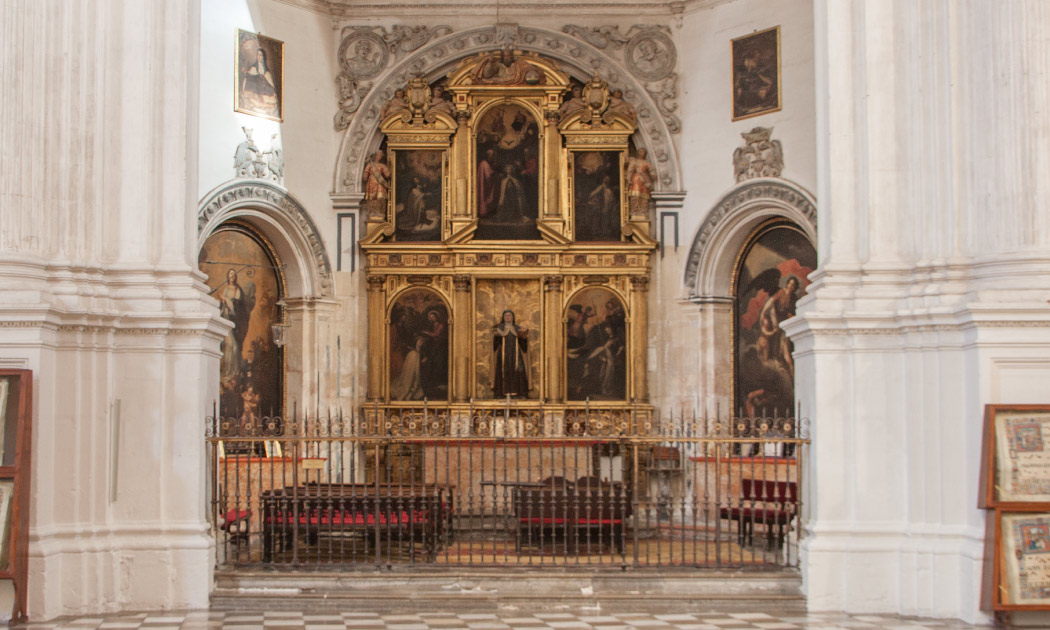
The main chapel retains this commemorative and monumental function. The cathedral thus embodies three key purposes: historical, liturgical, and funerary.
A symbolic and coherent structure
These motivations came together to form a cohesive architectural expression. The central head of the cathedral symbolizes both the victory of Christian faith in Granada and the presence of the Eucharist.
Through this structure, the Church and the Crown sought to reflect Granada’s renewed religious identity. The main chapel became the spiritual core and the architectural heart of the entire building.
Influence on art and popular devotion
Granada Cathedral helped spread Eucharistic devotion across the city, influencing sacred art and popular religious traditions. The Corpus Christi festival, one of Granada’s most important celebrations, centres around this temple.
Spiritual leaders like Saint John of Ávila and Fray Luis de Granada contributed to the theological foundation of this vision.
Visit Granada Cathedral
Now that you understand the origins of the Cathedral’s architecture and decoration, you’ll appreciate its details more deeply. Every arch and chapel carries meaning.
Buy your tickets at ticketsgranadacristiana.com and enjoy your visit to this iconic Renaissance monument.
Book your ticket and uncover the architectural secrets of Granada Cathedral.