

The Royal Chapel of Granada is the mausoleum of Isabella I of Castile and Ferdinand II of Aragon, the Catholic Monarchs. Built between 1505 and 1517 next to the Cathedral, in the heart of the historic centre, it is one of the most historically significant monuments in Spain: the place the monarchs themselves chose as their eternal resting place, a symbol of the end of the Reconquista and the birth of modern Spain. General admission costs €7 (free for children under 12) and tickets can be booked online at Tickets Granada Cristiana.
The decision was no accident. After the conquest of Granada in 1492 — the last Muslim kingdom on the Iberian Peninsula — Isabella and Ferdinand made the city the ultimate symbol of their political and religious project. Choosing to be buried here was a statement: Granada represented the culmination of the Reconquista, and their mausoleum had to stand where it had all ended.
In 1504, before her death, Queen Isabella herself gave the order to build the chapel. Construction began in 1505 under the direction of architect Enrique Egas, one of the great names of late Gothic architecture in Spain, and continued until 1517. But neither Isabella nor Ferdinand lived to see it completed: their bodies rested for years in the Convent of San Francisco in the Alhambra until 1521, when Emperor Charles V ordered their final transfer.
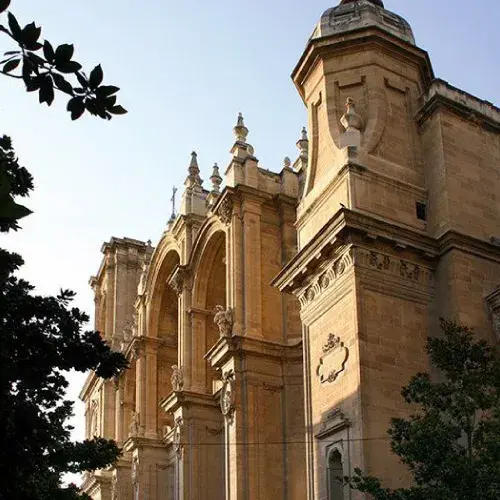
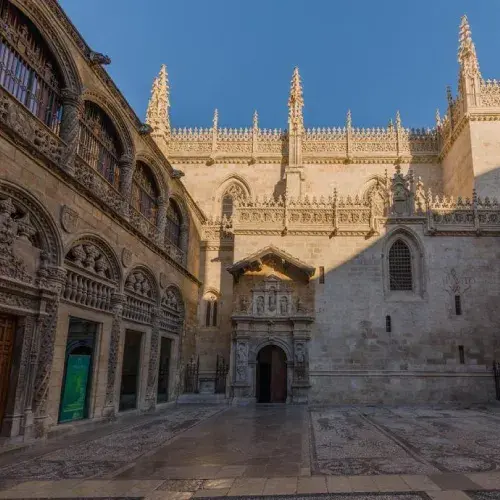
From the outside, the Royal Chapel is barely visible. Hemmed in between the Cathedral, the old Lonja and the church of El Sagrario — buildings erected on the site of Granada's former Great Mosque — it shows only a single exterior façade. But the contrast between its plain smooth walls and the exuberant ornamentation of its pinnacles, cresting and Plateresque doorway is precisely the best introduction to the late Gothic or Isabelline style: an architecture that saves all its richness for the interior.
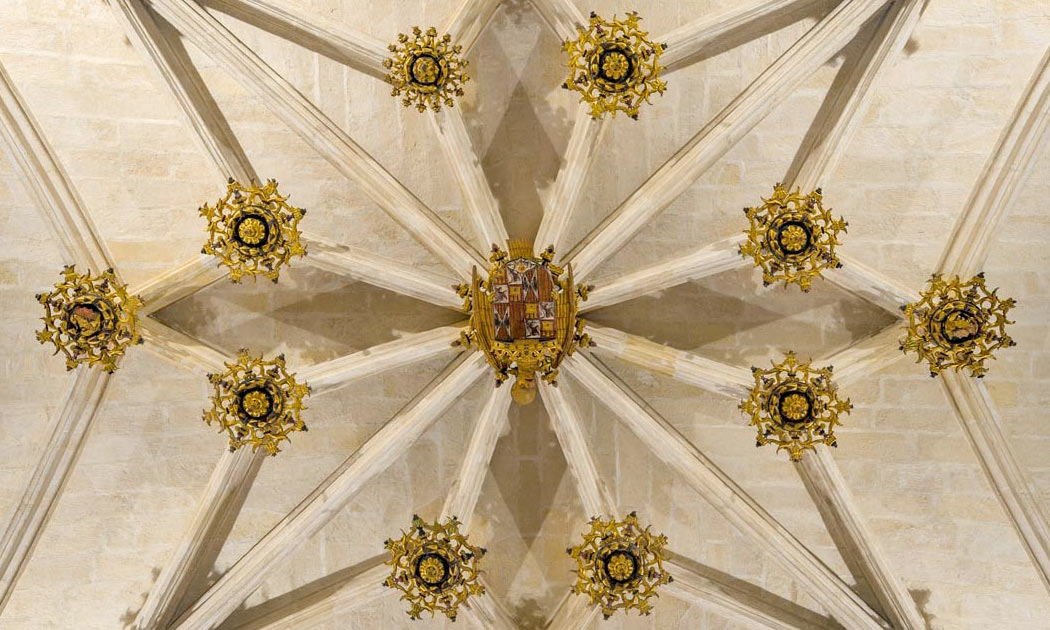
Inside, the single rectangular nave is covered with ribbed vaulting of extraordinary elegance. Light enters filtered and the space invites quiet reflection. Everything is designed to draw the eye to the centre, where the tombs await.
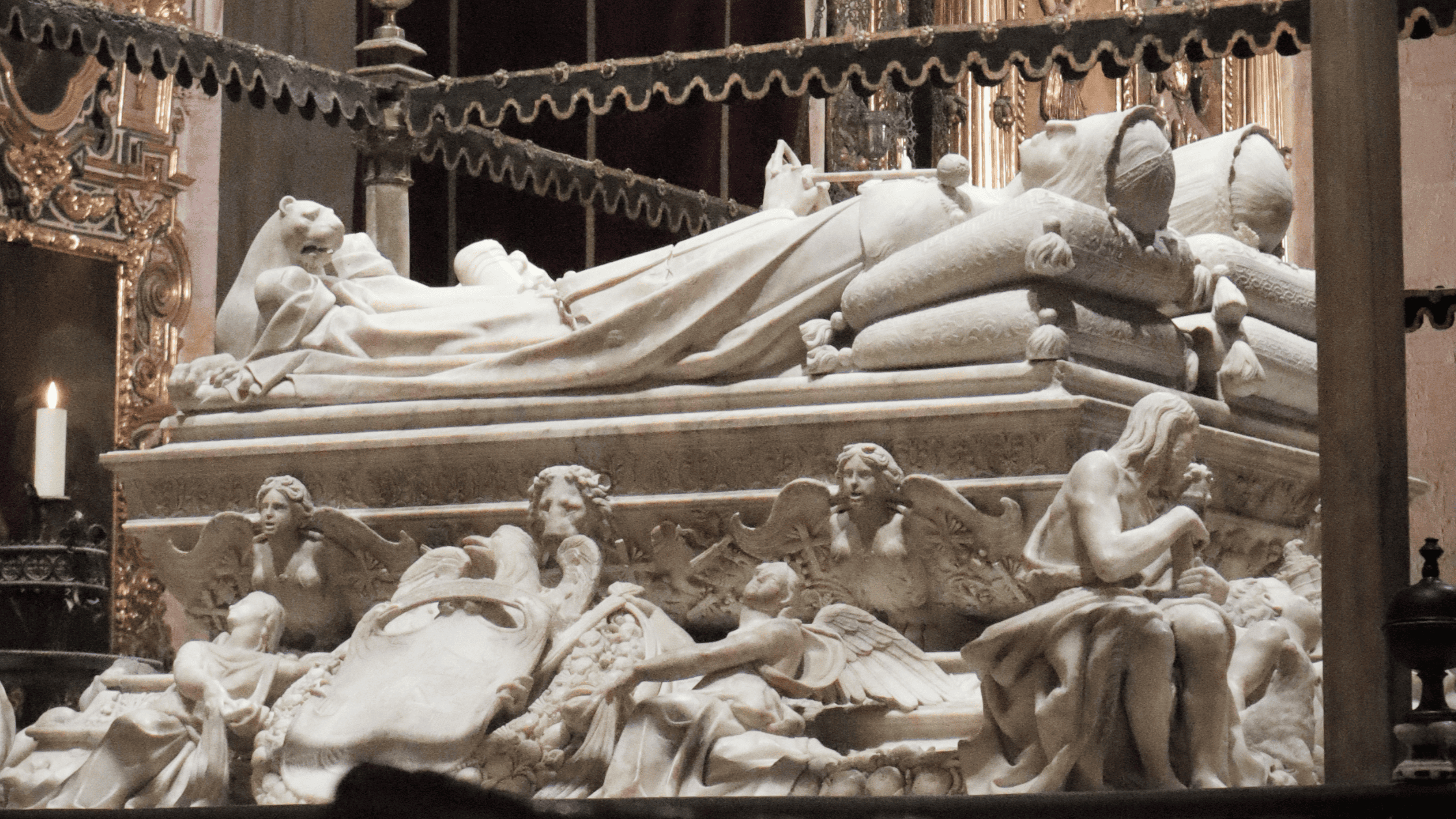
The heart of the visit is the two monumental white marble tombs that occupy the centre of the chapel, separated from the rest of the space by the celebrated iron grille by Bartolomé de Jaén, one of the masterpieces of Spanish Renaissance ironwork.
The tomb of the Catholic Monarchs is the work of Italian sculptor Domenico Fancelli, carved in Genoa from Carrara marble. Ferdinand is depicted in military armour, hands resting on his sword; Isabella wears a simple court dress that conveys, according to experts, her character and humility. The second tomb, housing the remains of Joanna I — known as Joanna the Mad — and Philip the Handsome, is the work of Bartolomé Ordóñez and is considered even more refined than the first.
One telling detail: Ferdinand's head rests on a slightly higher pillow than Isabella's. Legend has it that when disputes arose over who should occupy the more prominent position, the craftsmen settled the matter with that subtle difference in height.
What very few visitors realise is that the magnificent marble tombs are, in reality, commemorative monuments. The actual remains of the monarchs lie in an underground crypt, accessible via a small staircase. There, in simple lead coffins, rest Isabella, Ferdinand, Joanna, Philip and the Infante Miguel de la Paz — grandson of the Catholic Monarchs, son of their daughter Isabella and the King of Portugal, who died at barely two years old and who, had he survived, would have inherited both Spain and Portugal.
Adjacent to the chapel, the sacristy was converted into a museum following instructions that Isabella herself left in her will: she wanted her most precious belongings to accompany her memory in this place. The result is a collection of remarkable historical depth.
Among the most outstanding pieces are the queen's sceptre — one metre long, with a rhomboidal upper finial and overlapping leaf ornaments — and Ferdinand's sword, the work of an Italian workshop, probably Florentine, 92 cm long with a gold-engraved hilt. Also on display are Isabella's crown, her personal chest and what was once her mirror — a Renaissance-style piece, 72 cm high, later converted into a monstrance. The museum also holds a remarkable collection of Flemish painting, with works attributed to Rogier van der Weyden, as well as Italian panels and books that once belonged to the queen, who was an avid art collector.
One historical episode worth noting: when Franco visited Granada in 1939, he expressed his desire to take Ferdinand's sword. The royal chaplain flatly refused. The sword remains in its display case.
The Royal Chapel is in the very heart of Granada's historic centre, on Calle Oficios, just steps from the Cathedral and less than 10 minutes on foot from Plaza Nueva. It is the most accessible of all the monuments managed by Tickets Granada Cristiana: no transport needed, and a natural pairing with a visit to the Cathedral or a stroll through the Alcaicería.